Guide 04 UK rural life
What is a hedgerow? Hedges, walls and field boundaries
A hedgerow is a line of closely spaced shrubs and trees that marks a boundary, shelters animals and wildlife and can be centuries old. Here is what makes one, how it is looked after and how dry stone walls do the same job in stony country.
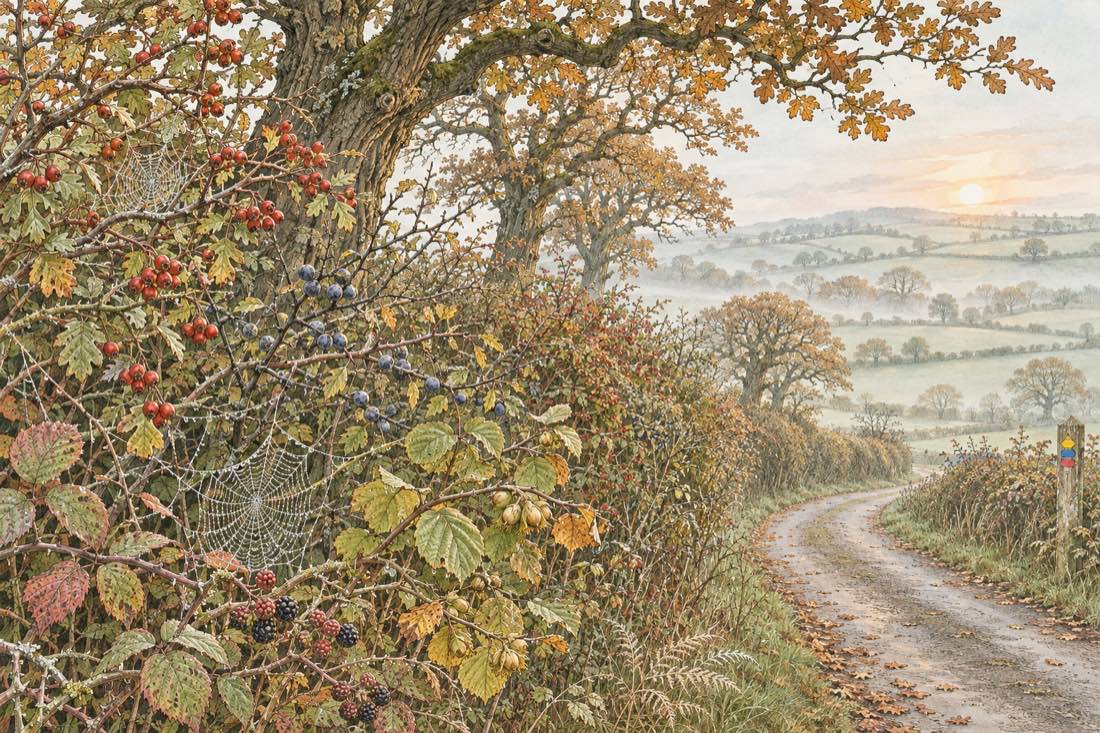
Hedge or hedgerow
In everyday use the two words overlap. A hedge is any row of shrubs planted or managed as a boundary, from a garden privet to a field edge. A hedgerow usually means the longer, more mixed line found around fields and beside lanes, often containing several shrub species and the odd mature tree. Many older hedgerows hold more species than a garden hedge and function as a habitat in their own right.
A common rule of thumb is that older hedgerows host more kinds of plant, but age is hard to read from outside. Local records, old maps and the number of woody species in a stretch can all give clues.
What grows in a hedgerow
Common hedgerow shrubs include hawthorn, blackthorn, hazel, field maple and holly, with dog rose, bramble and ivy filling the gaps. Oak and ash are among the trees that stand within the line. The mix varies with soil and region, and so does the way the hedge was laid, planted or left to grow.
The plants flower and fruit across the year, which is why hedgerows feed insects, birds and small mammals for many months, from spring blossom to autumn berries.
Why hedgerows matter
Hedgerows work as shelter, food and corridors. Birds nest in them, small mammals travel along them and insects find nectar and cover. For farmers they can keep stock in, shelter animals from wind and reduce soil loss on slopes.
They also shape how the countryside looks. The patchwork you see from a hill or a plane window is made of hedged fields, and lines of hedge often show where an old boundary or lane once ran.
Hedge laying and cutting
Hedge laying is a traditional craft in which stems are partly cut and bent over so that the hedge thickens at the base and stays stock-proof. Styles differ by region, and local societies keep the skills alive through competitions and training.
Cutting is regulated. In England, rules apply to hedgerows next to agricultural land, and cutting or trimming of qualifying hedgerows is generally banned from 1 March to 31 August to protect nesting birds, with listed exceptions. The detail is on GOV.UK. Removing a hedgerow is a separate matter handled by local planning authorities.
Dry stone walls
Where stone is plentiful and trees are scarce, field boundaries are often dry stone walls, built without mortar from stone gathered nearby. They are common in upland areas such as the Yorkshire Dales, the Peak District and the Lake District, and in places like the Cotswolds.
A good wall is built in layers with larger stones at the base, smaller stones in the middle and long through-stones that tie the two faces together. Gaps between stones shelter lichens, insects and small animals, so a wall can be habitat as well as a fence.