Guide 02 UK rural life
The Countryside Code explained
The Countryside Code is short advice on how to behave when you visit farmland, woods and open land. It is built around three ideas: respect everyone, protect the environment and enjoy the outdoors.
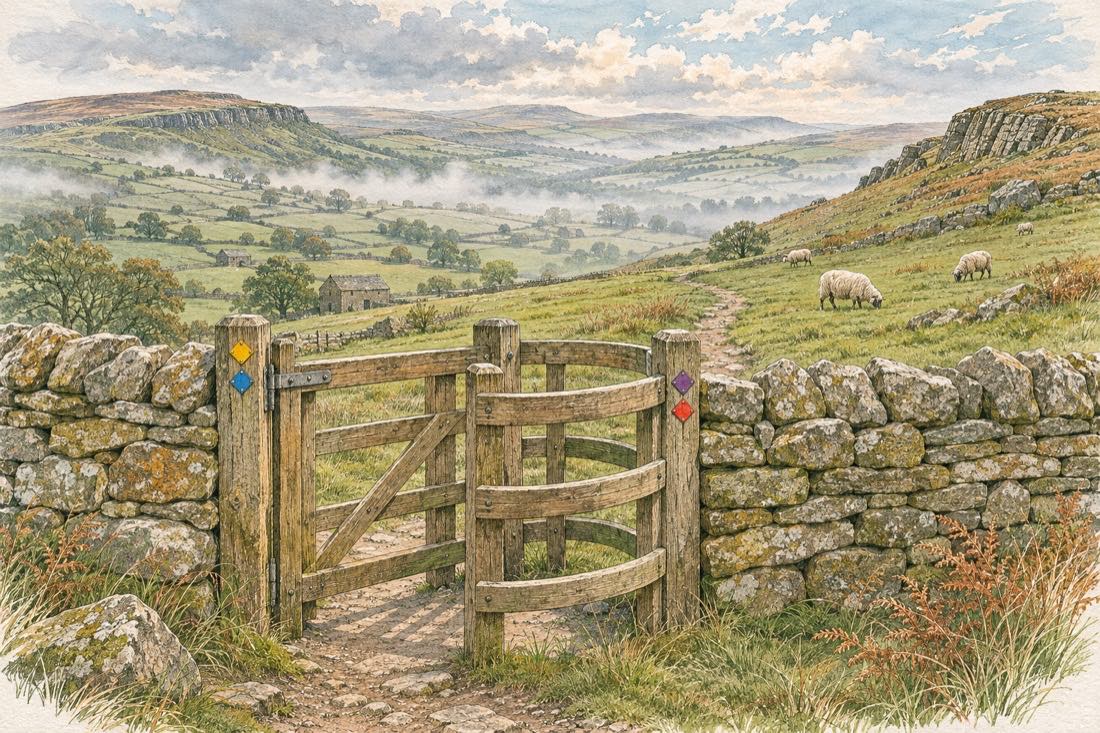
What the Countryside Code is
The Countryside Code is guidance, not a statute. It was first issued decades ago and has been refreshed over the years, and the current version groups its advice under three headings. The advice is aimed at visitors, but it works only because farmers, landowners and rural communities keep the places that visitors come to enjoy.
Separate versions or equivalents apply in England, Wales, Scotland and Northern Ireland. They agree on the main points but differ in wording and in the law behind them.
Respect everyone
This part is about neighbours and workers. Countryside is somebody's home and somebody's workplace. Be considerate when you park, keep to rights of way and do not block gateways or tracks that farm vehicles need. Leave gates and property as you find them, because an open gate can let animals out and a closed one can cut them off from water.
Dogs are a frequent source of trouble. The advice is to keep dogs under effective control, and on a short lead around livestock and during the bird nesting season when ground-nesting birds are at risk.
Protect the environment
Take your litter home. Food waste, plastic and glass can harm animals and spoil the view, and it is not safe to assume that fruit peel or other leftovers rot away harmlessly. Be careful with fire: a disposable barbecue or a dropped match can destroy habitat in a dry spell.
Plants and wildlife also need room. Stay on paths where you can, leave wild plants where they grow and take only photographs and keep your distance from nesting birds and young animals.
Enjoy the outdoors
The third part is about planning ahead. Check the route, the weather and your own fitness before you go, and know the signs and symbols you may meet. Follow local signs, because they often point to temporary closures such as tree work, a lambing field or a path diversion.
Many people also find it helpful to learn the rules of public footpaths, since the code assumes you can tell a path from a farm track.
England, Wales and Scotland differ
The right to wander on open land is not the same across the UK. England and Wales give a right of access to mapped open country and registered common land, while Scotland has broader access rights set by its own legislation and its own outdoor access code. Northern Ireland has a different pattern again, with fewer general access rights.
The official English text is published on GOV.UK.