Guide 06 UK rural life
Rewilding projects in the UK
Rewilding means giving natural processes more room to shape land and water. This guide explains what it covers, what kinds of project exist across the UK and where it meets farming and local life.
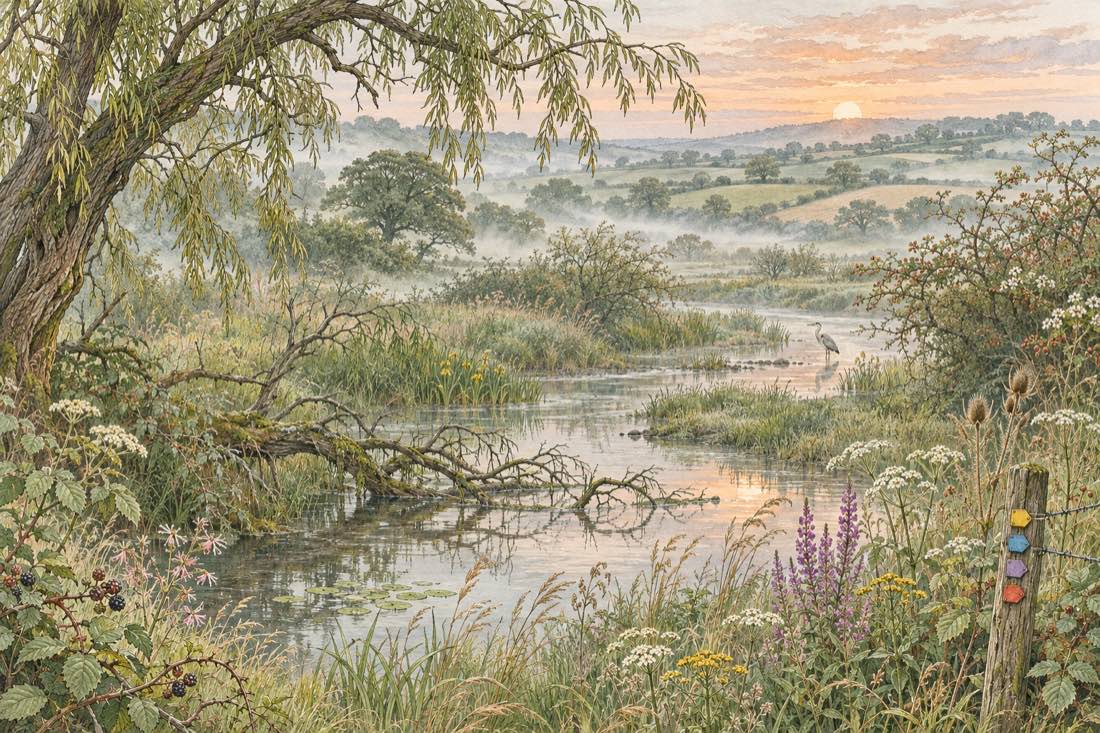
What rewilding means
Rewilding is an approach to conservation that aims to restore natural processes such as river flow, grazing by wild or free-roaming animals, natural regeneration of trees and the return of lost species. It is less about creating a particular look and more about letting nature do part of the work once the conditions allow.
People use the word in different ways. For some it means large landscape projects, for others small changes such as a wilder field margin or a restored pond. The projects below are therefore a range and not a single method.
Kinds of project
- Rivers and wetlands: removing barriers, reconnecting rivers to their floodplains and restoring marshes.
- Woodland and scrub: letting trees regenerate naturally or planting native trees, often with fencing and grazing management.
- Peatland: blocking drains and restoring bogs so that they hold water and carbon.
- Coast and sea: restoring saltmarsh and seagrass.
Projects can be led by landowners, charities, community groups or public bodies, and many combine several of these.
Species coming back
Some projects focus on species that were lost or reduced. Beavers have returned to certain rivers in England and Scotland, and white-tailed eagles have been reintroduced in parts of the UK. Other efforts help smaller species such as water voles, pollinators and ground-nesting birds.
Reintroductions need licences, monitoring and local discussion. Not every proposal proceeds, and the debate about large predators remains unsettled.
Rewilding and farming
Rewilding touches farming at several points. Land that is taken out of intensive production changes the local economy, while wetter land and recovering rivers can help with flood risk, water quality and soil. Some farmers are exploring mixed models in which food production and nature recovery share a farm.
Opinions are divided, and rural communities often raise concerns about jobs, grazing rights, access and the look of the landscape. A fair account treats these concerns and the benefits together. The farming guide sets out the other side of the picture.
Visiting with care
Many rewilding areas are open to walkers on public rights of way, sometimes with extra signs for livestock or sensitive habitat. Follow local notices, keep dogs under control and keep to marked routes. The footpath rules and the Countryside Code apply as they do anywhere else.