Independent guides / Land / Paths / Villages
Rural life in the UK, explained
Plain guides to footpaths, farms, hedges, village customs and wild places across the British countryside. Scroll and the fields turn through the seasons, and move the cursor to send a gust of wind across the crops.
What this site covers
A working landscape, not a postcard
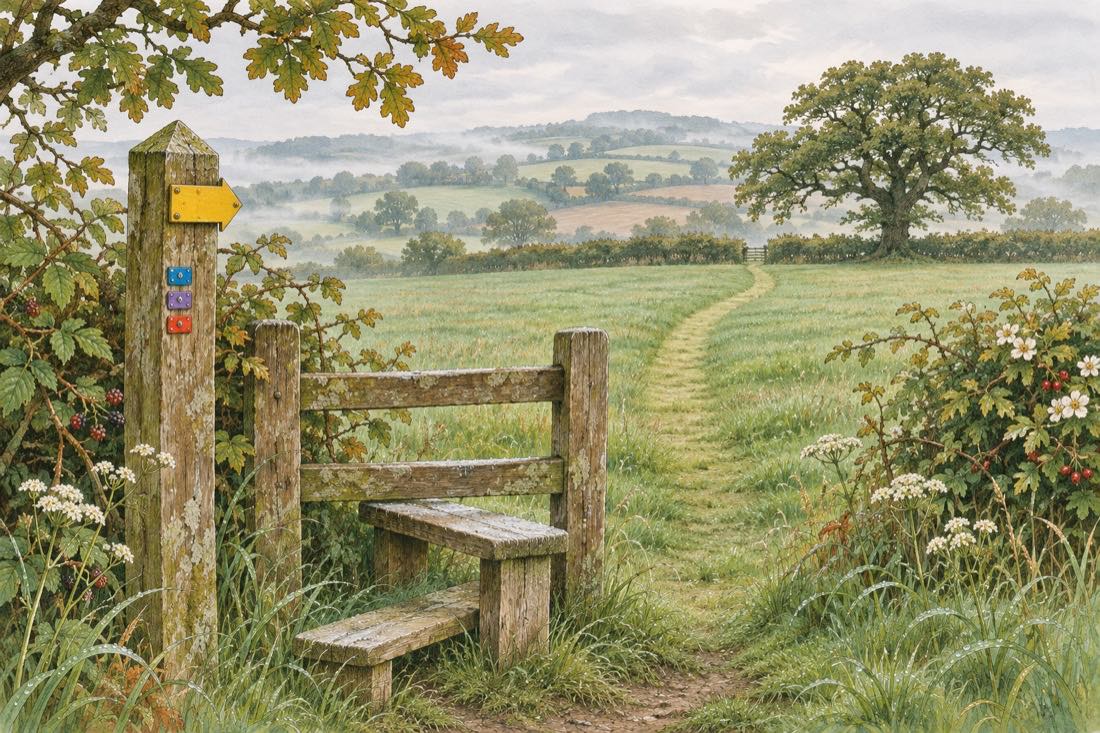
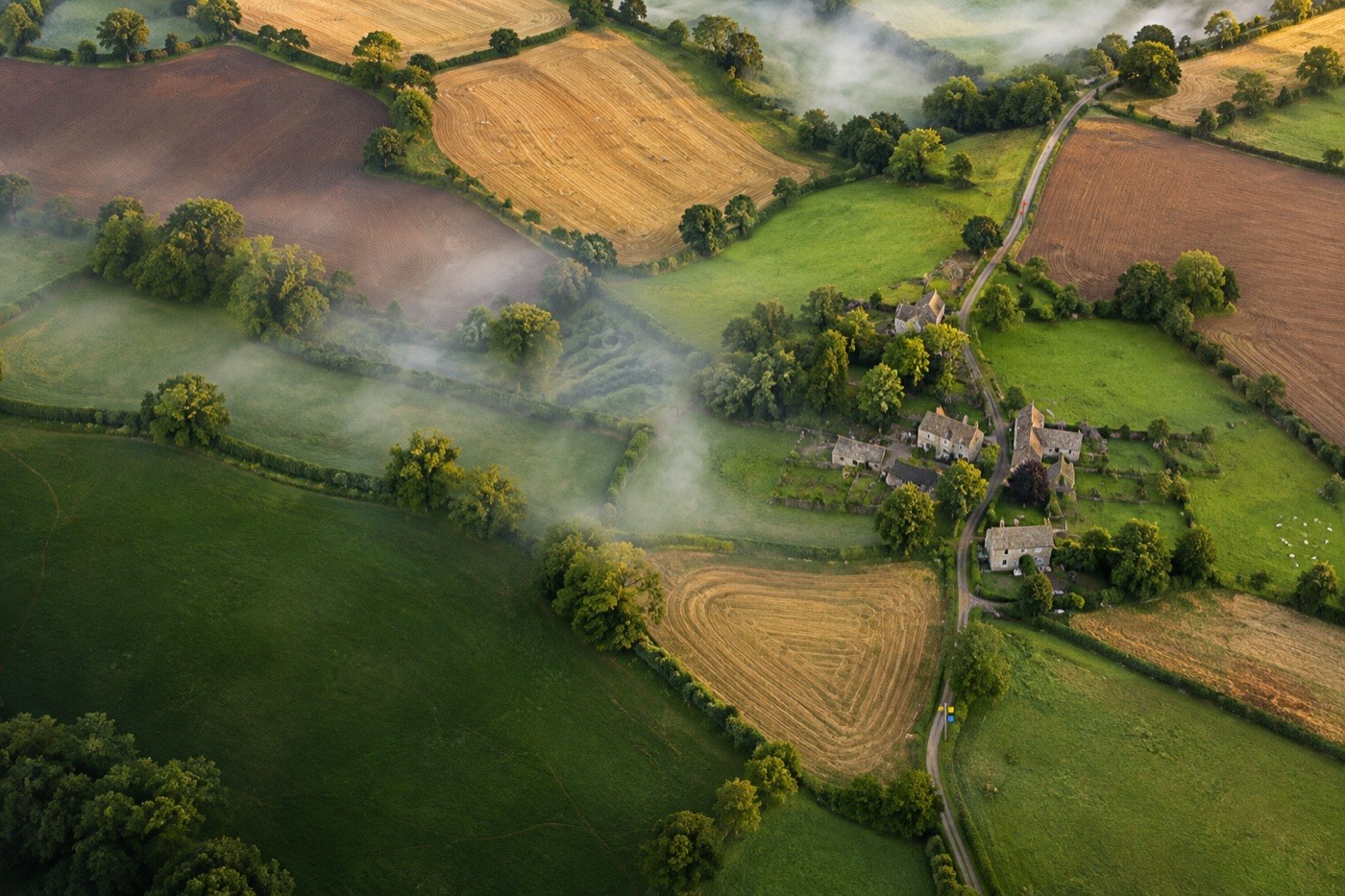
The British countryside is part farm, part home, part playground and part wildlife habitat, and all of it is managed by someone. A walker, a farmer, a village volunteer and a conservation worker may stand in the same field and see four different places.
These guides explain the basics without taking sides: where you may walk, the Countryside Code, how farms use land, the hedgerows and walls between fields, village traditions and rewilding. Where rules differ by nation or region, we say so.
Four kinds of right of way
Follow the arrows across the map
The waymark colours follow one code in England and Wales. Scroll sideways along the route, one station at a time.
The reading deck
Six guides, stacked like field notes
The cards pile up as you scroll. Each opens a plain guide with its facts kept general and checked against official sources.
05
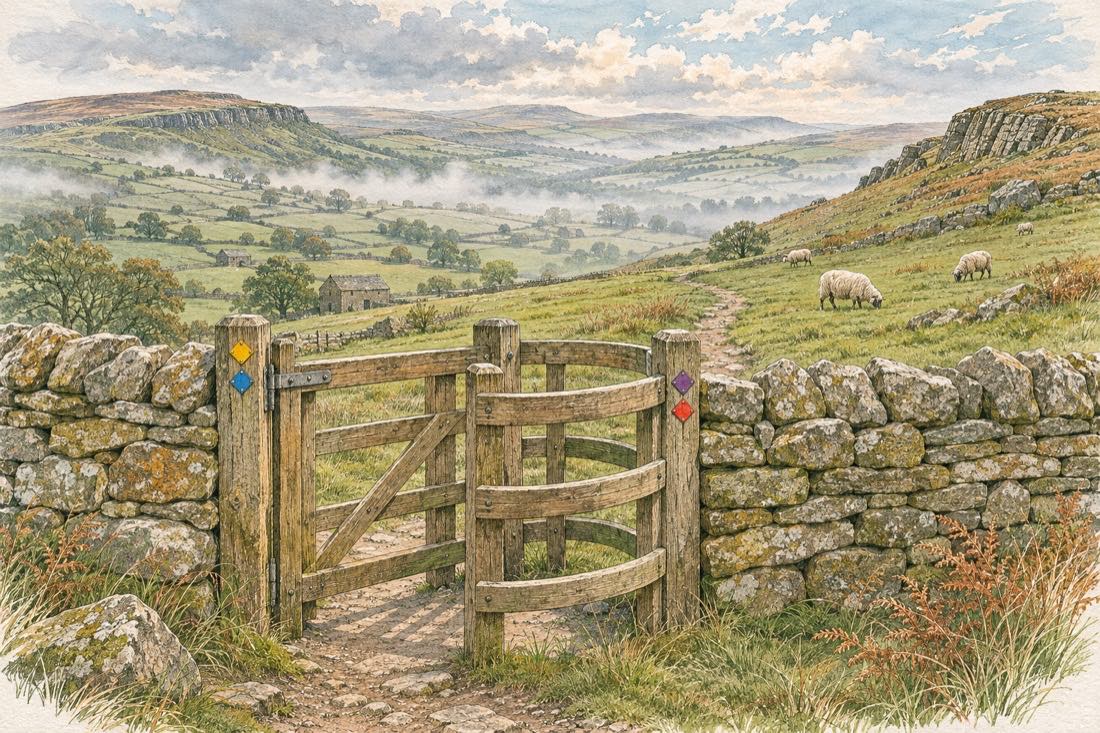
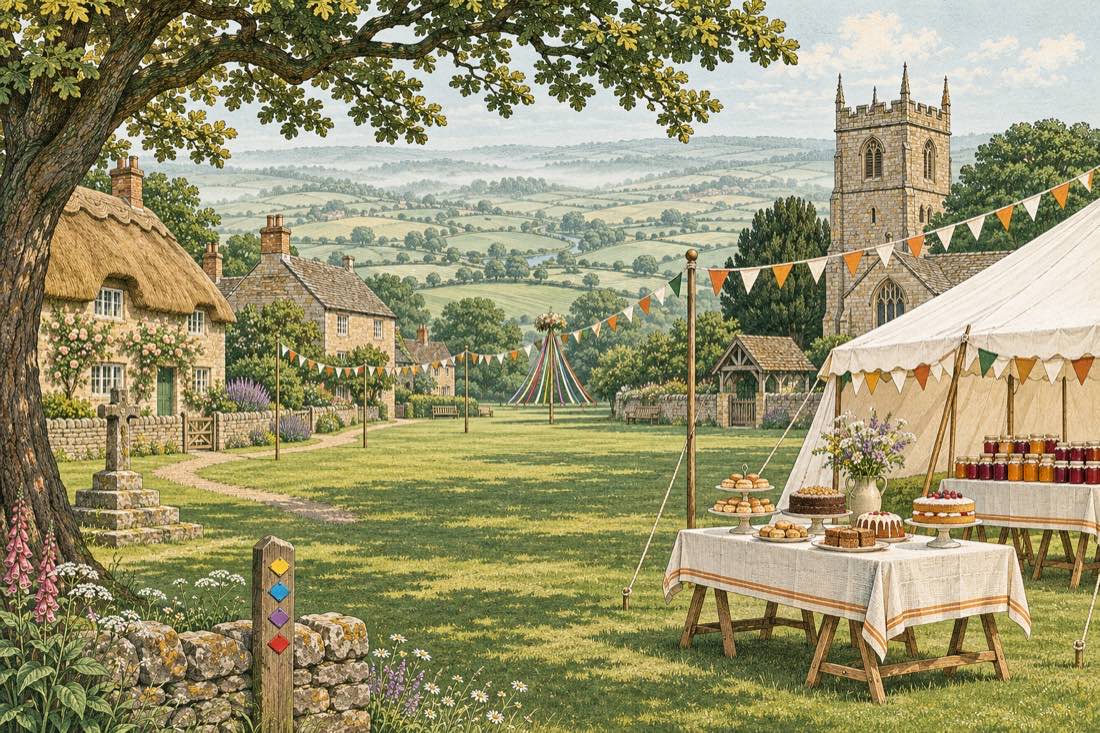
Village traditions in England
Fetes, harvest, well dressing and wassailing in plain terms.
Read the guide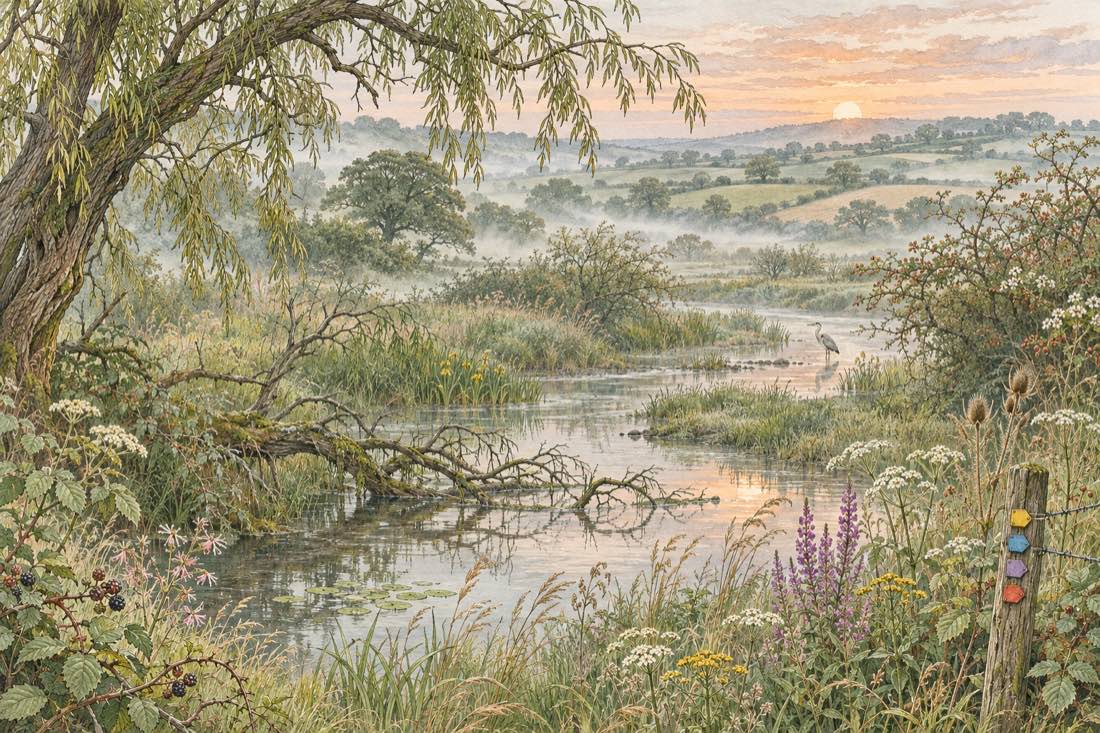
06
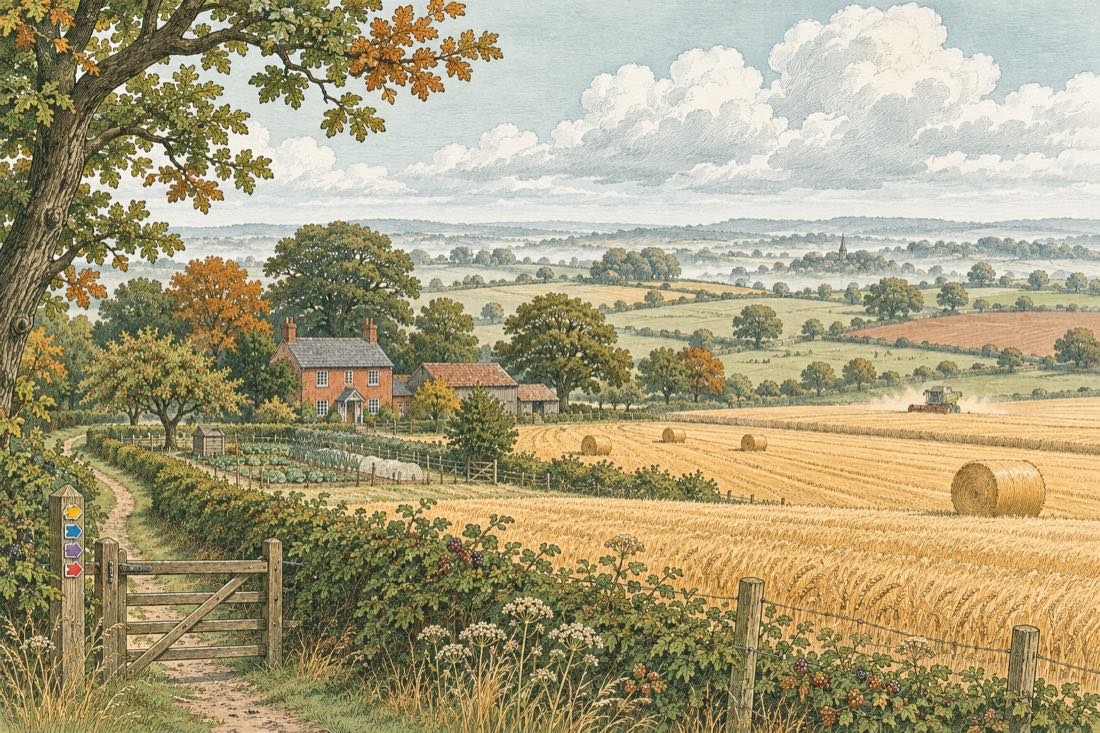
Rewilding projects in the UK
Rivers, woodland, peat and species returns, with the questions people raise.
Read the guide
Quick answers
Questions readers ask
- What is rural life in the UK like?
- It varies widely, from upland sheep farms and market towns to commuter villages near cities. Shared features are small communities, farming and land use close at hand and customs such as the village fete.
- Is there a right to roam in the UK?
- It depends where you are. England and Wales give a right of access to mapped open country and registered common land, and Scotland has broader access rights. See the Countryside Code guide and the footpath rules.
- What is a hedgerow?
- A line of closely spaced shrubs and trees that marks a boundary and shelters wildlife. The hedgerow guide covers plants, laying and the cutting rules.
- How much of the UK is farmland?
- Government statistics put it at roughly 70 per cent of UK land, covering crops, grassland and rough grazing. See farming in the UK.
- Is this the site of a campaign or an organisation?
- No. It is an independent information site and not affiliated with any party, charity or public body, as the About page says.